
Spear
Unknown Artist
16th–19th century
Medium
Wood, steel, gold
Dimensions
L. 79 in. (200.7 cm); L. of head 17 1/2 in. (44.5 cm); W. 1 5/8 in. (4.1 cm); Wt. 37.2 oz. (1054.6 g)
Classification
Shafted Weapons
Culture
Javanese
Department
Arms and Armor
Museum
Metropolitan Museum of Art, New York, NY
Credit
Bequest of George C. Stone, 1935
Accession Number
36.25.2043
Rights
Public Domain
Art Historical Context
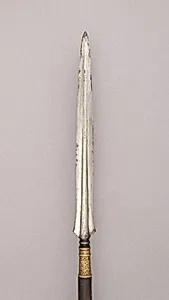
This magnificent Javanese spear, crafted by an unknown artist between the16th and 19th centuries, exemplifies the exquisite fusion of functionality and artistry in Southeast Asian arms. Standing nearly 6.5 feet (200.7 cm) long, with a formidable steel head measuring 17.5 inches (44.5 cm), it weighs a substantial 37.2 ounces (1054.6 g). The wooden shaft provides balance and grip, while intricate gold accents on the steel blade highlight the weapon's status as more than mere armament—likely a symbol of prestige for warriors or nobility. In Javanese culture, from the era of powerful sultanates and Dutch colonial encounters, shafted weapons like this spear were essential for both battlefield combat and ceremonial displays. The steel head, forged with precision, suggests advanced metallurgical skills, while the gold embellishments reflect the island's rich tradition of opulent decoration, akin to the ornate keris daggers. Such pieces blurred the line between utility and art, embodying spiritual power (kesaktian) believed to protect the bearer. Today, this spear graces the Metropolitan Museum of Art's Arms and Armor department, a bequest from George C. Stone in 1935. It invites visitors to ponder Java's martial heritage and masterful craftsmanship, where every curve and gleam tells a story of valor and elegance.