
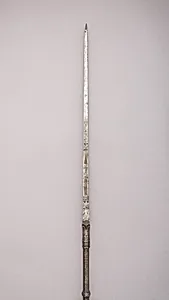
Spear
Unknown Artist
18th–19th century
Medium
Steel, brass
Dimensions
L. 67 in. (170.2 cm); L. of head 23 1/2 in. (59.7 cm); W. 1 in. (cm); Wt. 5 lbs. 12 oz. (2608.2 g)
Classification
Shafted Weapons
Culture
Indian, Rajput
Department
Arms and Armor
Museum
Metropolitan Museum of Art, New York, NY
Credit
Bequest of George C. Stone, 1935
Accession Number
36.25.1943
Rights
Public Domain
Art Historical Context
This formidable spear, crafted by an unknown Rajput artist in 18th–19th India, exemplifies the martial artistry of the region's warrior elite. Measuring an impressive 67 inches (.2 cm) in total length—with a substantial 23½-inch (59.7 cm) steel head adorned with brass—it weighs a hefty 5 pounds 12 ounces (2608.2 g). Forged from steel for the blade and reinforced with brass elements, likely for decorative fittings or balance, it belongs to the Metropolitan Museum of Art's Arms and Armor collection, through the bequest of George C. Stone in 1935. In Rajput culture, centered in Rajasthan, such shafted weapons were indispensable for cavalry charges and close combat, embodying the clan's legendary valor and chivalry. Rajput warriors, often clashing with Mughal forces, prized finely wrought arms that blended lethal functionality with aesthetic elegance. The steel's durability ensured battlefield reliability, while brass accents hinted at the intricate metalworking techniques of Indian armories, where weapons doubled as status symbols. Today, this spear offers a tangible link to India's turbulent history, inviting visitors to ponder the skill and spirit behind its creation. A true testament to Rajput heritage, it stands as both weapon and work of art.