
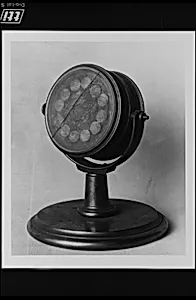
Specimen of the Atlantic Cable
Unknown Artist
1856–65
Medium
Metal
Dimensions
Dimensions unavailable
Classification
Cable
Department
The American Wing
Museum
Metropolitan Museum of Art, New York, NY
Credit
Gift of Cyrus W. Field, 1892
Accession Number
92.10.11
Rights
Public Domain
Tags
Art Historical Context
Behold the *Specimen of the Atlantic*, a remarkable metal artifact from 1856–65, in The Metropolitan Museum of Art's American Wing. Donated in 1892 by Cyrus W. Field—the visionary entrepreneur behind the project—this coiled segment captures a pivotal moment in technological history. Far from a traditional painting or sculpture, it embodies human ingenuity as a tangible piece of the world's first attempts to lay a submarine telegraph cable across Atlantic Ocean. In the mid-19th century, advances in electrical science sparked dreams of instant communication between continents. Field's expeditions, starting in 1857, faced treacherous seas and technical failures, but they paved the way for the successful 1866 cable that shrank the world, enabling near-instant news and commerce between America and Europe. This specimen, likely salvaged from one of those daring ventures, highlights the era's blend of engineering prowess and bold ambition—seven strands of copper wrapped in gutta-percha insulation and armored in iron, designed to withstand crushing ocean depths. Displayed today, it reminds us how 19th-century innovations reshaped global connectivity, influencing everything from diplomacy to daily life. A testament to American enterprise, this unassuming metal relic invites wonder at the invisible threads that wove our modern world.