
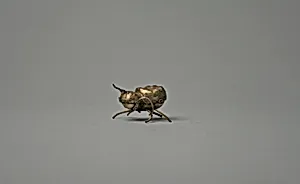
Spider Ornament
Unknown Artist
6th–7th century
Medium
Gilded copper
Dimensions
Length 1 in.
Classification
Metal-Ornaments
Culture
Moche
Department
Arts of Africa, Oceania, and the Americas
Museum
Metropolitan Museum of Art, New York, NY
Credit
Bequest of Jane Costello Goldberg, from the Collection of Arnold I. Goldberg, 1986
Accession Number
1987.394.120
Rights
Public Domain
Tags
Art Historical Context
This delicate **Spider Ornament**, crafted gilded copper around the 6th–7th century, hails the Moche culture of ancient Peru's northern coast. Measuring just 1 inch in, this tiny masterpiece exemplifies the Moche's extraordinary skill inworking, transforming humble copper a shimmering gold-like treasure through gilding techniques that fused the base metal with a precious layer. Likely worn as adornment—perhaps as an earspool or necklace pendant—it a spider in intricate detail, highlighting culture's fascination with the natural world. The M, flourishing from about 100–700 CE, were masterful artisans whose metal ornaments often featured animals, deities, and mythical beings, blending realism with symbolic power. Spiders, tagged here among insects, may evoke themes of weaving, creation, or the earth's hidden forces in Moche cosmology, where nature's creatures held profound ritual significance. This piece reflects their advanced metallurgy, which rivaled contemporary Andean societies and underscored social status through luxurious materials. Today, housed in the Metropolitan Museum of Art's Department of the Arts of Africa, Oceania, and the Americas (bequest of Jane Costello Goldberg, 1986), it invites us to marvel at a vanished world's ingenuity. Up close, its petite scale reveals big ideas about life, craft, and reverence for the insect realm.