
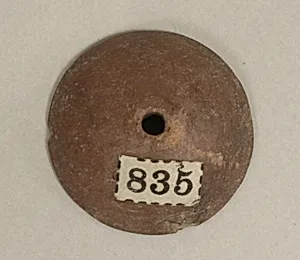
Spindle Whorl
Unknown Artist
10th–early 16th century
Medium
Ceramic
Dimensions
Diameter 1 in.
Classification
Ceramics-Implements
Culture
Mexican
Department
Arts of Africa, Oceania, and the Americas
Museum
Metropolitan Museum of Art, New York, NY
Credit
Museum Purchase, 1900
Accession Number
00.5.835
Rights
Public Domain
Art Historical Context
This petite ceramic spindle whorl, just 1 inch in diameter, hails from Mexican culture during the expansive period from the 10th to the early 16th century time bridging post-Classic Mesoamerican societies through the eve of Spanish contact. As a humble yet essential tool, it was spun atop a spindle to twist plant fibers like cotton or maguey into thread, powering the textile traditions vital to daily life, trade, and ritual garments in ancient Mexico. Crafted from clay, this implement showcases the refined ceramic techniques of its makers, likely fired to achieve durability for repetitive use. Its compact form highlights the ingenuity of pre-Hispanic artisans, who blended functionality with subtle artistry in everyday objects. Spindle whorls often bore symbolic motifs, though this example's precise designs remain a testament to the anonymous skill of its creator. Acquired by the Metropolitan Museum of Art through a 1900 purchase, this spindle whorl now resides in the Department of Arts of Africa, Oceania, and the Americas. It invites visitors to appreciate how such unassuming artifacts reveal the sophisticated craftsmanship and cultural continuity of Mexico's indigenous peoples.