
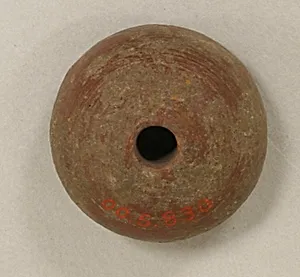
Spindle Whorl
Unknown Artist
10th–early 16th century
Medium
Ceramic
Dimensions
Diameter 1 in.
Classification
Ceramics-Implements
Culture
Mexican
Department
Arts of Africa, Oceania, and the Americas
Museum
Metropolitan Museum of Art, New York, NY
Credit
Museum Purchase, 1900
Accession Number
00.5.830
Rights
Public Domain
Art Historical Context
Nestled in the Metropolitan Museum of Art collection of Arts of Africa, Oceania, and the Americas, petite ceramic spindle whorl from Mexican culture dates to the 10th early 16th century Measuring just 1 inch in diameter, it exemplifies the refined craftsmanship of pre-Columbian artisans, who fashioned such implements from clay to aid in spinning fibers like cotton into thread. Acquired through museum purchase in 190, it offers a tangible link to the daily lives of indigenous peoples during a transformative era spanning late Postclassic Mesoamerica into the early colonial period. Spindle whorls were essential tools in textile production, a cornerstone of Mexican societies where woven goods held economic, ritual, and social value. This ceramic example highlights the technical prowess in pottery-making—firing and shaping durable, functional objects on a miniature scale. Though the artist remains unknown, the whorl's survival underscores the blend of utility and artistry in everyday implements, reflecting broader cultural traditions of innovation and resourcefulness among Mexican communities. Visitors can appreciate how such humble artifacts reveal the ingenuity behind vibrant textile traditions that influenced vast trade networks.