
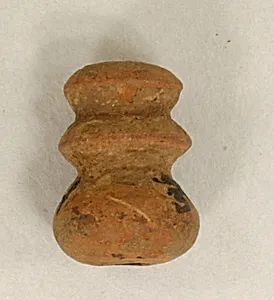
Spindle Whorl
Unknown Artist
10th–early 16th century
Medium
Ceramic
Dimensions
Diameter 1/2 in.
Classification
Ceramics-Implements
Culture
Mexican
Department
Arts of Africa, Oceania, and the Americas
Museum
Metropolitan Museum of Art, New York, NY
Credit
Museum Purchase, 1900
Accession Number
00.5.925
Rights
Public Domain
Art Historical Context
Welcome to the Metropolitan Museum of Art's collection of Arts of Africa, Oceania, the Americas. This delicate **Spindle Whorl**, crafted by an unknown Mexican artist between the 10th and early 16th centuries is a small ceramic disk just ½ inch in diameter. Acquired through museum purchase in 190, it exemplifies everyday functional art from pre-Columbian Meso, where such tools were essential for spinning fibers into thread. Spindle whorls like this one were vital to ancient Mexican societies, particularly among indigenous groups who wove cotton and other materials into textiles for clothing, rituals, and trade. Women typically used them by attaching fibers to a spindle stick and twirling the weighted whorl to twist the strands—a labor-intensive process that underpinned household economies and cultural traditions. Made from ceramic, this implement highlights skilled pottery techniques: likely hand-formed, decorated with slips or incising, and low-fired for durability. Though diminutive, its survival speaks to the ingenuity of Mexican artisans, blending utility with subtle artistry. Imagine the hands that shaped it, contributing to vibrant weaving traditions that persisted into the colonial era. A quiet testament to daily life in ancient Mexico! (198 words)