
Spindle Whorl
Unknown Artist
9th–10th century
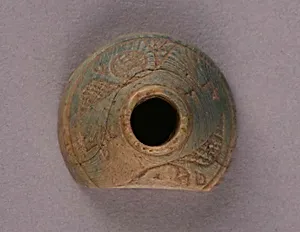
Medium
Bone; tinted, incised, and inlaid with paint
Dimensions
H. 3/8 in. (1 cm) Diam. 9/16 in. (1.4 cm)
Classification
Ivories and Bone
Department
Islamic Art
Museum
Metropolitan Museum of Art, New York, NY
Credit
Rogers Fund, 1940
Accession Number
40.170.396
Rights
Public Domain
Art Historical Context
Nestled in the Islamic Art collection at the Metropolitan Museum of Art, this delicate spindle whorl from the 9th–10th century exemplifies the artistry infused into everyday objects during the Islamic Golden Age. Crafted by an unknown artist, it served a practical purpose: as a flywheel attached to a spindle, it weighted and steadied the twisting of fibers into thread—a vital step in textile production that underpinned economies and daily life across the Abbasid world and beyond. Fashioned from bone, the whorl measures just 3/8 inch high and 9/16 inch in diameter, demanding extraordinary precision. The artist tinted the bone for color, incised intricate patterns, and inlaid them with paint, blending functionality with aesthetic appeal. Such techniques highlight the mastery of ivories and bone carving in Islamic workshops, where even humble tools became canvases for decoration. This tiny artifact, acquired through the Rogers Fund in 1940, reveals the cultural reverence for craftsmanship in medieval Islamic society. Spindle whorls like this one underscore women's roles in fiber arts and the interconnectedness of art, labor, and trade in a thriving civilization.