
Spoon
mid-18th century
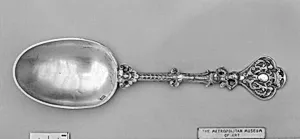
Medium
Silver
Dimensions
Overall: 7 × 1 13/16 in. (17.8 × 4.6 cm)
Classification
Metalwork-Silver
Culture
Dutch, Leeuwarden
Department
European Sculpture and Decorative Arts
Museum
Metropolitan Museum of Art, New York, NY
Credit
Gift of Mrs. Samuel P. Avery, 1897
Accession Number
97.2.49
Rights
Public Domain
Tags
Art Historical Context
This elegant silver spoon, crafted by silversmith Jacobus Niebuur in mid-18th-century Leeuwarden, exemplifies the refined metalwork traditions of Friesland, Netherlands Measuring just 7 inches long, it belongs to the European decorative arts tradition where everyday objects like spoons doubled as symbols of status and craftsmanship. Niebuur, working in a region renowned for its skilled silversmiths, produced this for a prosperous local family, as evidenced by the intricate coat of arms and human figures adorning its handle. The spoon's decoration—featuring heraldic motifs and figural elements—highlights advanced silversmithing techniques such as chasing and engraving, which allowed for delicate, narrative details on a small scale. Coats of arms were common in Dutch silverware, signifying lineage and prestige amid the prosperous Dutch Golden Age's lingering influence. These embellishments transformed a functional utensil into a miniature work of art, blending utility with Rococo-inspired ornamentation popular in the era. Now in the Metropolitan Museum of Art's collection, thanks to a 1897 gift from Mrs. Samuel P. Avery, this piece offers a glimpse into 18th-century domestic luxury and the enduring artistry of Leeuwarden's workshops. Visitors will appreciate its subtle gleam and storytelling details up close.