
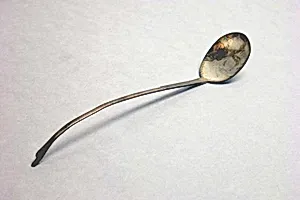
唐 銀(?)勺|Spoon
Unknown Artist
Medium
Metal, silver?
Dimensions
L. 10 1/4 in. (26 cm)
Classification
Metalwork
Culture & Period
China · Tang dynasty (618–907)
Department
Asian Art
Museum
Metropolitan Museum of Art, New York, NY
Credit
Rogers Fund, 1922
Accession Number
22.79.3
Rights
Public Domain
Art Historical Context
This elegant silver spoon, hailing from China's Tang dynasty (618–907), offers a glimpse into one of the most prosperous and cosmopolitan eras in Chinese history. Measuring a substantial 10¼ inches (26 cm) in length, its slender form suggests it may have been used for serving delicate foods or in ritual contexts, reflecting the Tang's refined material culture. Crafted from high-quality metal—likely silver, as indicated by its designation—this piece exemplifies the period's masterful metalworking techniques, where artisans employed lost-wax casting or hammering to achieve smooth, lustrous surfaces. The Tang dynasty, often called China's golden age, saw unprecedented advancements in metallurgy, fueled by Silk Road trade and imperial patronage. Luxury metalwork like this spoon was not merely functional but a status symbol, adorning elite households and banquets. Its survival underscores the durability of Tang craftsmanship, preserving everyday elegance amid political upheavals. Acquired through the Rogers Fund in 1922 and now in the Metropolitan Museum of Art's Asian Art collection, this unassuming artifact invites us to appreciate the artistry in the ordinary—bridging ancient luxury with modern curiosity.