
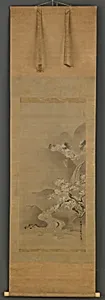
Spring Landscape
Classification
Painting
Department
Smithsonian Collection
Museum
Smithsonian American Art Museum
Credit
Gift of Charles Lang Freer
Accession Number
F1892.28a-c
Rights
Public Domain
Tags
About this artwork
Contains two seals on lower right.
Art Historical Context
**Spring Landscape** by Kano Tanū (1602–1674), created in 1672, the fleeting beauty of Japan's spring during the Edo period (1615–1868). As a master of the prestigious Kano school, Tan'yū blended bold ink washes with delicate detailing, a hallmark of this influential style that dominated Japanese painting for centuries. This *kakemono*—a traditional hanging scroll—likely evokesyamato-e*, the classical Japanese aesthetic celebrating native landscapes, with motifs like blooming cherry blossoms, sturdy cherry trees, and cascading waterfalls symbolizing renewal and the ephemeral nature of life. The painting's two seals in the lower right authenticate it as Tan'yū's work, a common practice among Edo artists to affirm provenance. Rendered in ink and possibly color on silk or paper (medium unspecified), it reflects the era's cultural reverence for seasonal harmony, where cherry blossoms (*sakura*) inspired poetry, festivals, and art alike. Tan'yū, who served the Tokugawa shoguns, elevated screen and scroll painting to official art, bridging courtly elegance with natural poetry. A cherished gift from collector Charles Lang Freer to the Smithsonian American Art Museum, this piece invites visitors to ponder Japan's enduring love for nature's rhythms, offering a serene window into Edo serenity.