
Sprinkler
Unknown Artist
probably 18th–19th century
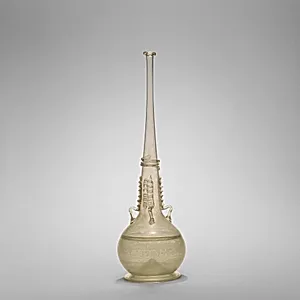
Medium
Glass, colorless; blown with internal rib, folded foot, applied handles and decoration
Dimensions
H. 13 in. (33 cm) Max. Diam. 3 15/16 in. (10 cm)
Classification
Glass
Department
Islamic Art
Museum
Metropolitan Museum of Art, New York, NY
Credit
Gift of Henry G. Marquand, 1883
Accession Number
83.7.261
Rights
Public Domain
Art Historical Context
Behold the elegant *Sprinkler*, a delicate masterpiece of Islamic glass artistry from the late 18th to 19th century. Crafted from colorless blown glass, this vessel stands 13 inches tall with a slender profile (maximum diameter just under 4 inches), featuring a folded foot for stability, applied handles for graceful handling, and intricate decoration. Likely used to disperse rosewater, perfume, or ablution liquids, it evokes the refined rituals of hospitality and purification in Islamic culture, where such objects scented homes, mosques, and ceremonial spaces. The sprinkler's creation showcases advanced glassblowing techniques prevalent in the Islamic world. The body was blown with an internal rib—a structural innovation adding both strength and subtle texture—while handles and ornaments were meticulously applied and tooled. The folded foot, formed by reheating and bending the base, ensured balance and durability. These methods highlight the virtuosity of anonymous artisans, whose work rivaled the finest European glassmaking of the era. A generous gift to the Metropolitan Museum of Art from Henry G. Marquand in 1883, this piece offers a window into everyday luxury and technical prowess. Though its exact origin remains unknown, it exemplifies the enduring beauty of Islamic decorative arts, inviting us to appreciate the sensory elegance of a bygone world.