
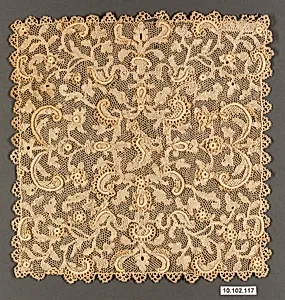
Square (one of four)
Unknown Artist
18th century
Medium
Needle lace
Dimensions
L. 8 x W. 8 inches (20.3 x 20.3 cm)
Classification
Textiles-Laces
Culture
Italian
Department
European Sculpture and Decorative Arts
Museum
Metropolitan Museum of Art, New York, NY
Credit
Henrietta Seligman Lace Collection, Bequest of Mrs. Jesse Seligman, 1910
Accession Number
10.102.117
Rights
Public Domain
Art Historical Context
Nestled in the Metropolitan Museum of Art's European Sculpture and Decorative Arts, *Square (one of four is a delicate 8-by-8-inch panel of Italian needle lace from the 18 century. Crafted by unknown artist, this square exemplifies the exquisite textile artistry of the period, where lace was not just adornment but a symbol of and wealth. Its precise, symmetrical design—likely intended as part of a larger set for garments, linens, or ecclesiastical vestments—showcases the labor-intensive needle lace technique, known in Italy as *punto ago*. Artisans meticulously stitched and knotted fine linen threads over a paper pattern, creating airy, sculptural motifs free from any supporting fabric. In 18th-century Italy, particularly in centers like Venice and Milan, needle lace reached new heights of virtuosity, blending Renaissance traditions with Baroque opulence. This medium allowed for unparalleled intricacy and transparency, making it prized for ruffs, cuffs, and altar cloths among the elite. Unlike bobbin lace, needle lace offered fluid, painterly effects, reflecting the era's fascination with light, shadow, and illusion. As one of four matching squares from the Henrietta Seligman Lace Collection—bequeathed in 1910—this piece preserves a fragment of Italy's textile heritage, inviting visitors to marvel at the anonymous hands that wove such timeless elegance. (198 words)