
2/16
1664
Medium
etching
Dimensions
118; 152
Rights
Public Domain
About this artwork
verzamelaarsmerk, verso, gestempeld: Lugt 240
Art Historical Context
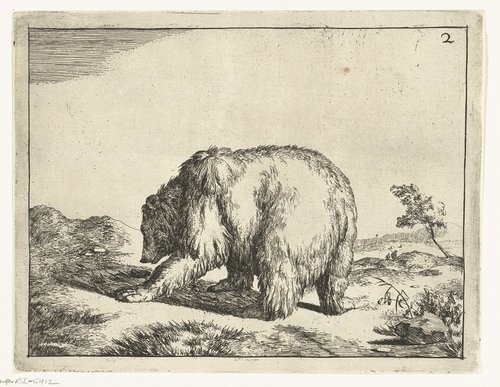
**2/16 by Marcus de Bye (1664)** This delicate etching, titled *2/16* and created by Dutch artist Marcus de Bye in 1664, measures a modest 118 × 152 mm, inviting close inspection much like a pocket-sized treasure from the Dutch Golden Age. De Bye, active in the mid-17th, was a skilled printmaker whose works often captured everyday scenes and landscapes with a keen eye for detail. As the second in what appears to be a series of 16 plates, it reflects the era's fascination with sequential storytelling through prints, making art accessible beyond oil paintings. Etching, the medium here, was a revolutionary intaglio technique: artists drew into a wax ground on a copper plate, submerged it in acid to etch fine lines, and printed from the inked surface. This allowed for expressive, fluid lines ideal for de Bye's precise style, bridging the gap between drawing and reproduction. Popular in the prosperous Netherlands, such prints democratized art, adorning homes of burghers and collectors alike. On the verso, a stamped collector's mark (Lugt 240, associated with 19th-century bibliophile Pierre Firmin-Didot) underscores its esteemed provenance, linking this small work to centuries of connoisseurship. A charming glimpse into 17th-century life, *2/16* reminds us how etchings preserved fleeting moments for posterity.