
Staff Weapon
Unknown Artist
ca. 1590
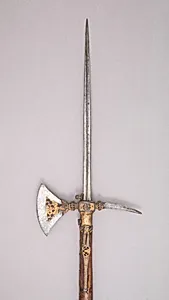
Medium
Steel, leather, gold, textile
Dimensions
L. 41 1/2 in. (102.9 cm); L. of head 18 1/2 in. (47 cm); W. 10 in. (25.4 cm); Wt. 3 lbs. 4 oz. (1474.2 g)
Classification
Shafted Weapons
Culture
Italian
Department
Arms and Armor
Museum
Metropolitan Museum of Art, New York, NY
Credit
Rogers Fund, 1904
Accession Number
04.3.50
Rights
Public Domain
Art Historical Context
This elegant Staff Weapon, crafted in Italy around 1590, exemplifies the of Renaissance arms-making. Measuring over 41 inches in length with a substantial 18½-inch steel head, it features luxurious accents of gold, leather, and textile wrappings, blending deadly functionality with opulent decoration. Housed in the Metropolitan Museum of Art's and Armor Department (acquired via the Rogers in 1904), it reflects the era's mastery in forging weapons that served both battlefield and ceremonial roles. In late 16th-century Italy, shafted weapons like this one—possibly a partisan or ronca—were favored by elite infantry and guards for their reach and versatility in thrusting or slashing. Italian armorers, renowned across Europe for their technical prowess, often embellished such pieces with gold inlays or gilding, signaling the bearer's status. The steel head's robust form (10 inches wide, weighing over 3 pounds total) underscores engineering precision, while the leather and textile shaft provided a secure, comfortable grip during prolonged use. Beyond utility, this artifact highlights the artistic fusion of form and function in Renaissance Europe, where weapons doubled as symbols of power and patronage. Visitors can appreciate how its intricate materials evoke the grandeur of Italian courts, inviting reflection on the blurred lines between art, warfare, and luxury.