
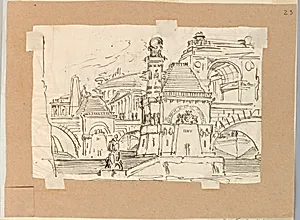
Stage Design, Group of Antique Buildings
early 19th century
Medium
theater
Classification
theater
Department
Smithsonian Collection
Museum
Smithsonian American Art Museum
Credit
Museum purchase through gift of various donors and from Eleanor G. Hewitt Fund
Accession Number
1938-88-415
Rights
Public Domain
About this artwork
Research in Progress
Art Historical Context
Step into the enchanting world of early 19-century theater with *Stage Design, Group of Buildings* by Angelo Toselli (ca. 1765?–1826). This captivating artwork, housed in the Smithsonian American Art, captures the grandeur of classical antiquity through a meticulously rendered group of ancient structures—likely inspired by Roman ruins or Greek temples. Created during a time when neoclassical revival swept European stages, Toselli's design would have transformed theaters into immersive dreamscapes, evoking the timeless allure of the past for audiences enthralled by opera and grand spectacles. As a theatrical medium, this piece exemplifies the artistry of stage design, where precise perspective and atmospheric detail created illusions of depth and scale under footlights. Toselli, an Italian architect and designer active in the late Enlightenment era, contributed to the evolution of scenic backdrops that blended architecture with fantasy, influencing productions across Europe. Though research on this specific work is ongoing, its presence in the Smithsonian's collection—acquired through museum purchases and the Eleanor G. Hewitt Fund—highlights its role in preserving the ephemeral magic of live performance. Imagine the hush of a packed house as curtains rose to reveal Toselli's vision: crumbling columns bathed in dramatic light, transporting viewers to a mythic world. A testament to theater's power to bridge eras, this design invites us to appreciate the unsung heroes behind the spectacle.