
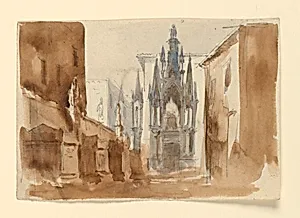
Stage Design, Tomb in Monumental Form
Medium
theater
Classification
theater
Department
Smithsonian Collection
Museum
Smithsonian American Art Museum
Credit
Museum purchase through gift of various donors and from Eleanor G. Hewitt Fund
Accession Number
1938-88-375
Rights
Public Domain
About this artwork
Research in Progress
Art Historical Context
**Stage Design, Tomb in Monumental Form** by Luigi Ricci (Italian, 1823–1896), created between 1860 and 1880, offers a captivating glimpse into the grandeur of 19th-century theatrical scenery. As a stage design depicting a monumental tomb, it evokes the dramatic, larger-than-life settings essential to opera and theater productions of the era. Ricci, working in Italy during a golden age of Romantic opera with composers like Verdi, crafted visuals that transformed stages into immersive worlds of emotion and spectacle. This artwork belongs to the theater medium, a classification highlighting its role in scenic design rather than standalone painting. Such designs, often rendered in gouache or watercolor on paper, guided painters and carpenters in building elaborate sets—think towering architecture and moody lighting to heighten tragedy or mystery. The monumental tomb motif suggests a scene of solemnity, perhaps for a classical tragedy or Gothic melodrama, underscoring theater's power to blend art, architecture, and narrative. Now preserved in the Smithsonian American Art Museum through a generous museum purchase, this piece celebrates the unsung artistry behind the curtain. It reminds us how Ricci's imaginative visions brought epic stories to life, inviting us to appreciate the creativity that made 19th-century audiences gasp in awe. (198 words)