
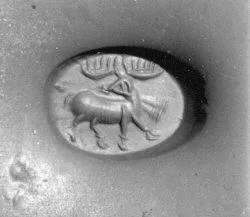
Stamp seal
Unknown Artist
ca. 3rd–7th century CE
Medium
Agate
Dimensions
0.51 x 0.75 x 0.71 in. (1.3 x 1.91 x 1.8 cm)
Classification
Stone-Stamp Seals
Culture & Period
Sasanian · Sasanian
Department
Ancient Near Eastern Art
Museum
Metropolitan Museum of Art, New York, NY
Credit
The Cesnola Collection, Purchased by subscription, 1874–76
Accession Number
74.51.4413
Rights
Public Domain
Tags
Art Historical Context
This exquisite stamp seal, crafted from agate during the Sasanian period (ca. 3rd–7th century CE), exemplifies artistry of ancient Near Eastern. Belonging to the Sasanian Empire—a Persian dynasty that bridged the classical and medieval worlds—these small stone objects (just 0.51 x 0.75 x 0.71 inches) were tools for sealing documents, goods, and clay bullae in administrative, trade, and personal contexts. Carved with precision, the seal's intaglio design likely features animal motifs, a hallmark of Sasanian iconography symbolizing power, protection, and the natural world revered in Zoroastrian-influenced society. Agate, a durable and lustrous semi-precious stone, was prized for its fine grain, allowing intricate engravings that produced sharp impressions when rolled or stamped into soft clay or wax. This technique not only ensured authenticity in an era without paper but also showcased the Sasanians' mastery of lapidary arts, blending functionality with aesthetic elegance. Such seals were status symbols, often worn as jewelry or carried by officials. Acquired through The Cesnola Collection at The Metropolitan Museum of Art, this artifact offers a tangible glimpse into daily life under one of Persia's most influential empires, highlighting their enduring legacy in administrative innovation and decorative prowess.