
Stamp seal
Unknown Artist
ca. 3rd–7th century CE
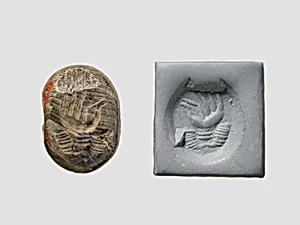
Medium
Calcite, gray
Dimensions
0.39 x 0.55 x 0.47 in. (0.99 x 1.4 x 1.19 cm)
Classification
Stone-Stamp Seals
Culture & Period
Sasanian · Sasanian
Department
Ancient Near Eastern Art
Museum
Metropolitan Museum of Art, New York, NY
Credit
Purchase, 1893
Accession Number
93.17.25
Rights
Public Domain
Art Historical Context
This petite stamp seal, crafted from gray calcite during the Sasanian period (ca. 3rd–7th century CE), offers a glimpse into the sophisticated administrative world of ancient Persia. Belonging to the Sasanian of the Iranian plateau, these seals were essential tools for—pressed into soft clay to mark documents, goods, or containers, much like a personal signature today. Measuring just 0.39 x0.55 x .47 inches, itsutive size belies its importance in daily bureaucracy and trade across the vast Sasanian Empire, whiched Rome in power and artistry. Carved from calcite, a relatively soft yet durable mineral, the seal exemplifies the era's masterful stoneworking techniques. Sasanian artisans favored such materials for their ability to hold fine intaglio designs, often featuring royal motifs, animals, or inscriptions in Pahlavi script—though specifics of this piece's imagery remain a tantalizing mystery. Acquired by the Metropolitan Museum of Art in 1893, it highlights the Met's early commitment to collecting Ancient Near Eastern treasures. As a survivor of over 1,500 years, this unassuming object underscores the Sasanians' cultural legacy: a blend of innovation and tradition that influenced Islamic art to follow. Pause here in our virtual gallery to appreciate how something so small sealed the fate of empires!