
Stamp seal
Unknown Artist
ca. 3rd–7th century CE
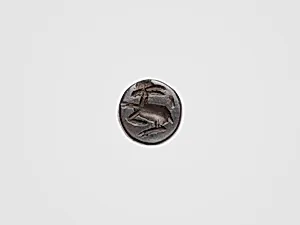
Medium
Hematite (?)
Dimensions
Diam. 1.2 cm x Th. .9 cm
Classification
Stone-Stamp Seals
Culture & Period
Sasanian · Sasanian
Department
Ancient Near Eastern Art
Museum
Metropolitan Museum of Art, New York, NY
Credit
Rogers Fund, 1936
Accession Number
36.30.32
Rights
Public Domain
Tags
Art Historical Context
This petite stamp seal, crafted around the 3rd–7th century CE during the Sasanian Empire exemplifies the ingenuity of ancient Persian artistry in administration. The Sasanians, who ruled from-day Iran and beyond, produced these small stone tools to imprint designs into soft clay, sealing documents, goods, and containers against tampering. Belonging to Metropolitan Museum of Art's Near Eastern collection (acquired via the Rogers Fund in 193), this seal measures just 1.2 cm in and 0.9 cm thick—small enough to wear as a pendant or carry in a pocket. Carved possibly from hematite, a durable iron ore prized for its hardness and luster, the seal's engraved face likely features animal motifs, a common Sasanian theme symbolizing power, protection, or zodiac influences. These designs reflected the empire's sophisticated bureaucracy, Zoroastrian beliefs, and royal iconography, blending functionality with artistry. Such seals were essential for trade along the Silk Road and imperial governance, offering a window into a vibrant culture that bridged antiquity and the medieval world. Visitors, pause to admire how this unassuming object encapsulates Sasanian innovation: a tiny emblem of authority that stamped history itself.