
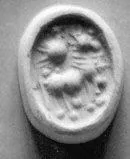
Stamp seal (ovoid) with animals
Unknown Artist
9th–7th century BCE
Medium
Hematite, black
Dimensions
Seal Face; 1.47 x 1.13 cm Height: 0.84 cm String Hole: 0.25 cm
Classification
Stone-Stamp Seals
Culture & Period
Syro-Anatolian-Levantine · Iron Age II
Department
Ancient Near Eastern Art
Museum
Metropolitan Museum of Art, New York, NY
Credit
Purchase, 1886
Accession Number
86.11.24
Rights
Public Domain
Tags
Art Historical Context
This petite ovoid stamp seal, from glossy black hematite hails from the Syro-Anat-Levantine culture during Age II (9th–7th century BCE). just 1.47 x 1.13 cm on its face and standing 0.84 cm tall, with a 0.25 cm string hole for suspension, it exemplifies the exquisite miniaturization of ancient Near Eastern artistry. Acquired by the Metropolitan Museum of Art in 6, it now resides in the Department of Ancient Near Eastern Art. Stamp seals like this were essential tools in daily life, used to imprint ownership marks on clay documents, storage jars, or parcels by rolling or pressing into soft material. Hematite's hardness and durability made it ideal for intricate carving, preserving fine details over millennia. The seal's face features dynamic motifs of birds and animals—common symbols in Levantine art evoking the natural world, protection, or divine forces amid a turbulent era of emerging kingdoms. Though the artist remains unknown, the seal's precision reflects masterful stoneworking techniques, blending functionality with symbolic power. It offers a window into Iron Age trade, administration, and beliefs in the crossroads of Syria, Anatolia, and the Levant.