
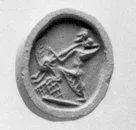
Stamp seal (scarab) with two-figure contest scene
Unknown Artist
second half of 8th–7th century BCE
Medium
Greenstone
Dimensions
Seal Face: 1.29 x 1.03 cm Height: 0.76 cm String Hole: 0.2 cm
Classification
Stone-Stamp Seals
Culture & Period
Assyro-Babylonian · Neo-Assyrian / Neo-Babylonian
Department
Ancient Near Eastern Art
Museum
Metropolitan Museum of Art, New York, NY
Credit
The Cesnola Collection, Purchased by subscription, 1874–76
Accession Number
74.51.4403
Rights
Public Domain
Tags
Art Historical Context
This exquisite stamp seal, carved from vibrant greenstone, dates to the second half of the 8th–7th century during the Neo-Assyrian Neo-Babylonian in ancient Mesopotamia. Shaped like a scarab—a form often borrowed from Egyptian iconography—the seal measures just 1.29 x 1.03 cm on its face, small enough to wear as an amulet or press into soft clay for authenticating documents, goods, or ownership. Part of the Metropolitan Museum of Art's renowned Cesnola Collection, it reflects the sophisticated artistry of Assyro-Babylonian culture, where such seals blended practicality with symbolic power. The seal's intaglio design depicts a dynamic two-figure contest scene, featuring men and birds in tense confrontation—a common motif symbolizing cosmic battles, heroism, or ritual struggles between humans and mythical creatures. Carved with remarkable precision on such a tiny scale, the greenstone medium lent durability and a lustrous green hue evoking life and fertility, prized in ancient Near Eastern art. These seals were status symbols for elites, sealing everything from royal decrees to trade shipments amid the empires' vast conquests. Today, this artifact offers a window into the interconnected world of the ancient Near East, where artistic motifs crossed cultures, capturing the era's blend of warfare, mythology, and daily administration in miniature form.