
Stand
Unknown Artist
ca. 1760
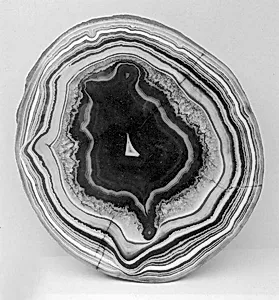
Medium
Carnelian
Dimensions
H. 1 in. (2.5 cm); Gr. W. 7 7/8 in. (20 cm)
Classification
Stone
Culture & Period
Japan · Edo period (1615–1868)
Department
Asian Art
Museum
Metropolitan Museum of Art, New York, NY
Credit
Gift of Mrs. V. Everit Macy, 1923
Accession Number
23.225.377
Rights
Public Domain
Art Historical Context
This delicate carnelian stand, crafted in Japan during the Edo period (5–1868) around 1760, exemplifies the era's mastery of luxury craftsmanship. Measuring just 1 inch (2.5 cm) high and 7⅞ inches (20 cm) at its greatest width, the piece is carved from carnelian—a vibrant, translucent variety of chalcedony prized for its warm reddish hue and durability. Such semi-precious stones were favored by artisans for their ability to take a high polish, revealing subtle plays of light that enhance their jewel-like appeal. The Edo period marked a golden age of peace and prosperity in Japan, fostering refined decorative arts amid a thriving merchant culture. While the stand's precise function—likely a base for incense burners, small altars, or precious objects—remains evocative of daily rituals or display practices, its unknown creator demonstrates exceptional skill in shaping hard stone into a stable, elegant form. Carnelian's rarity in Japanese sculpture underscores its status as a status symbol, blending utility with aesthetic sophistication. Today, this gift to the Metropolitan Museum of Art from Mrs. V. Everit Macy in 1923 invites us to appreciate the understated elegance of Edo-era stonework, a testament to Japan's enduring tradition of precision and beauty.