
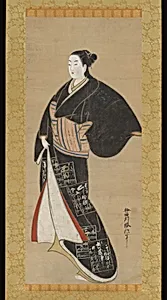
Standing Beauty
18th century
Medium
Hanging scroll; ink and color on paper
Dimensions
38 3/16 x 16 5/8 in. (97 x 42.3 cm)
Classification
Paintings
Culture & Period
Japan · Edo period (1615–1868)
Department
Asian Art
Museum
Metropolitan Museum of Art, New York, NY
Credit
Gift of Francis T. Henderson Jr., in memory of Harold G. Henderson, 1976
Accession Number
1976.404
Rights
Public Domain
Tags
Art Historical Context
"Standing Beauty" by Kondo Katsunobu is a captivating 18th-century hanging scroll from Japan's Edo period (1615–1868), a time of relative peace and cultural flourishing. Crafted in ink and color on paper, measuring 38 3/16 x 16 5/8 inches, this work exemplifies the bijin-ga genre—elegant portrayals of beautiful women that celebrated idealized feminine grace. Donated to the Metropolitan Museum of Art in 1976, it invites viewers into the refined world of Edo-era aesthetics, where such scrolls were unrolled for private admiration during tea gatherings or festivals. Kondo Katsunobu, active in the vibrant artistic scene of the time, skillfully blends delicate ink lines with soft colors to render the subject's poised stance and flowing robes. The hanging scroll format, a hallmark of Japanese painting, allowed for intimate, vertical compositions that emphasized harmony and poise. This piece reflects broader cultural values of the period, when urban prosperity in cities like Edo (modern Tokyo) fueled demand for art depicting kimono-clad beauties, blending realism with poetic elegance. Today, "Standing Beauty" stands as a window into Edo Japan's fascination with transient beauty, reminding us of the era's sophisticated fusion of everyday life and artistry in the Asian Art collection.