
Standing Figure
Unknown Artist
14th–15th century
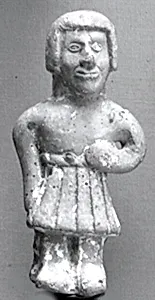
Medium
Ceramic
Dimensions
W. 1 7/8 × L. 3 7/8 in. (4.8 × 9.8 cm)
Classification
Ceramics-Sculpture
Culture
Aztec
Department
Arts of Africa, Oceania, and the Americas
Museum
Metropolitan Museum of Art, New York, NY
Credit
Museum Purchase, 1900
Accession Number
00.5.205
Rights
Public Domain
Tags
Art Historical Context
This petite ceramic *Standing Figure*, crafted by an unknown Aztec artist between the 14 and 15th centuries stands just under 4 inches tall, embodying the intimate scale typical of Mesoamerican votive sculptures. Housed in the Metropolitan Museum of Art's Department of the Arts of Africa, Oceania and the Americas, this was acquired through a museum purchase in 1900 highlighting early 20th-century interest in pre-Columbian artifacts. In Aztec society, during the height of the Mexica empire's expansion in central Mexico, small ceramic figures like this one often served ritual purposes—perhaps as offerings in household shrines, representations of deities, ancestors, or everyday people. The medium of ceramic was significant for its accessibility; artisans hand-built or mold-made these forms from clay, firing them to create durable, portable objects that contrasted with the empire's grander stone monuments. Though details of its exact form are modest, its human figure tag suggests a stylized portrayal of the body, reflecting Aztec conventions of symbolic anatomy over realism. Today, this unassuming sculpture invites us to ponder the spiritual life of Aztec communities, where art bridged the mundane and divine in everyday devotion. Its survival speaks to the resilience of these cultural treasures.