
Standing figure of Amenhotep III
Unknown Artist
ca. 1390–1352 B.C.
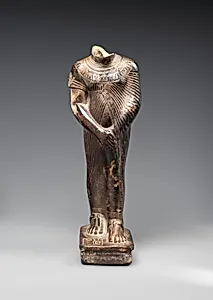
Medium
Chlorite schist
Dimensions
H. 22.2 (8 3/4 in.n); W. 8.6 (3 3/8 in.); D. 10.6 cm (4 3/16 in.)
Classification
Statuette, standing king, Amenhotep III
Period
New Kingdom
Department
Egyptian Art
Museum
Metropolitan Museum of Art, New York, NY
Credit
Theodore M. Davis Collection, Bequest of Theodore M. Davis, 1915
Accession Number
30.8.74
Rights
Public Domain
Tags
Art Historical Context
This exquisite standing figure of Amenhotep III, carved 1390–1352 B.C. during Egypt's New Kingdom (Dynasty 18), captures pharaoh at the height of his power. Amenhotep III ruled for nearly four decades, presiding over a golden age of, monumental architecture like the Luxor Temple, and extensive diplomatic relations. Such statues, often placed in temples or tombs, served as eternal homes for the ka— the vital spirit—allowing the king to receive offerings forever. Crafted from chlorite schist, a fine-grained, greenish stone prized for its smooth texture and subtle luster, the sculpture exemplifies New Kingdom mastery in hard-stone carving. At just 22.2 cm tall, its compact form features the classic Egyptian canon: a rigid, frontal pose with left foot forward, clenched fists, and idealized youthful features symbolizing divine kingship. The stone's rarity highlights the elite status of such works, reserved for pharaohs. Now in the Metropolitan Museum of Art's Egyptian Art Department, thanks to the Theodore M. Davis Collection (1915), this figure invites us to ponder ancient Egypt's blend of artistry and spirituality—a timeless bridge to a world where stone embodied eternity.