
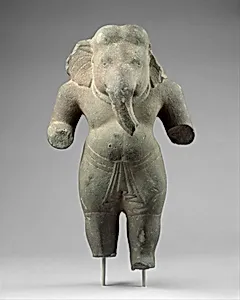
Standing Ganesha
Unknown Artist
second half 7th century
Medium
Stone
Dimensions
H. 17 1/4 in. (43.8 cm); W. 10 9/16 in. (26.9 cm); D. 6 in. (15.2 cm)
Classification
Sculpture
Culture & Period
Cambodia · pre-Angkor period
Department
Asian Art
Museum
Metropolitan Museum of Art, New York, NY
Credit
Rogers, Louis V. Bell and Fletcher Funds, 1982
Accession Number
1982.220.7
Rights
Public Domain
Tags
Art Historical Context
Behold the *Standing Ganesha*, captivating stone sculpture from Cambodia's pre-Angkor in the second half of the7th century. Carved from durable stone, this modest yet powerful figure stands just over 17 inches tall, the elephant-headed Hindu deity Ganesha, the beloved remover of obstacles and patron of arts and intellect. With its compact dimensions—17¼ inches high, 10⅝ inches wide, and inches deep—the sculpture likely adorned a temple shrine or private altar, inviting devotees to seek divine favor. Crafted during the early Khmer kingdoms of Funan and Chenla, before the grandeur of Angkor, this artwork reflects the profound Indian cultural influence that shaped Southeast Asian spirituality. Hinduism flourished alongside Buddhism in ancient Cambodia, and Ganesha's presence here underscores the deity's widespread reverence across Asia. The unknown artist's mastery of stone carving is evident in the smooth contours and poised stance, techniques that balanced realism with symbolic idealization to evoke the god's approachable benevolence. Today, this treasure graces the Metropolitan Museum of Art's Asian Art Department, acquired through the Rogers, Louis V. Bell, and Fletcher Funds in 1982. It offers a window into a vibrant era of artistic and religious exchange, reminding us of Ganesha's enduring role as a threshold guardian in both ancient rituals and modern admiration.