
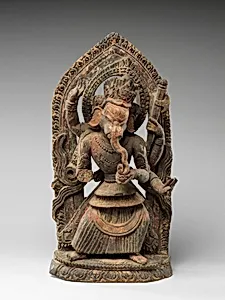
Standing Ganesha
Unknown Artist
16th–17th century
Medium
Wood with traces of polychrome
Dimensions
H. 20 1/4 in. (52.1 cm); W. 10 1/2 in. (26.7 cm); D. 5 3/4 in. (14.6 cm)
Classification
Sculpture
Culture
Nepal, Kathmandu Valley
Department
Asian Art
Museum
Metropolitan Museum of Art, New York, NY
Credit
Seymour Fund, 1961
Accession Number
61.39
Rights
Public Domain
Tags
Art Historical Context
This elegant wooden sculpture depicts Ganesha, the beloved elephant-headed deity revered as the remover of obstacles patron of arts and letters. Standing gracefully at just over 20 inches tall the figure captures the god in a poised, dynamic pose typical of Kathmandu Valley artistry from Nepal's 16th–17th centuries. Crafted by an unknown artist, it hails from a vibrant era when Hindu and Buddhist traditions flourished in the region, blending spiritual devotion with exquisite craftsmanship. Carved from wood and adorned with traces of original polychrome—vibrant paints that once brought the deity to vivid life—this sculpture exemplifies Newar sculptural techniques. The medium allowed for intricate detailing of Ganesha's attributes, such as his curved trunk, multiple arms, and potbelly, symbolizing abundance and wisdom. Polychrome enhanced the wood's natural warmth, making such figures central to temple worship and household shrines, where they invoked divine blessings. Acquired through the Seymour Fund in 1961, this piece from the Metropolitan Museum of Art's Asian Art collection offers a window into Nepal's rich cultural heritage, inviting visitors to appreciate the enduring allure of Ganesha's benevolent presence.