
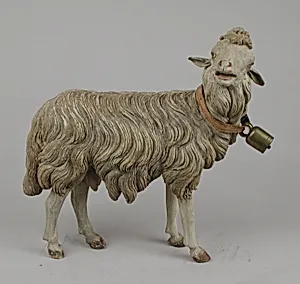
Standing sheep
Unknown Artist
second half 18th century
Medium
Polychromed terracotta body, wooden legs, metal ears
Dimensions
H. 8 1/8 in. (20.6 cm.)
Classification
Crèche
Culture
Italian, Naples
Department
European Sculpture and Decorative Arts
Museum
Metropolitan Museum of Art, New York, NY
Credit
Gift of Loretta Hines Howard, 1964
Accession Number
64.164.124
Rights
Public Domain
Tags
Art Historical Context
This delightful standing sheep, crafted by an unknown Neapolitan artist in the second half of the th century, is a charming figure from a traditional *crèche*—an elaborate Nativity scene central to Christmas celebrations in Baroque Naples. Standing just 8 1/8 inches (20.6 cm) tall, it the humble pastoral life surrounding the Holy Family, with its alert posture and textured wool evoking the animals that populated these vibrant, life-sized dioramas in churches and homes. Neapolitan crèches, or *presepii*, flourished during this period as expressions of deep Catholic devotion, blending religious piety with theatrical artistry amid the city's exuberant street culture. The sculpture's mixed-media construction highlights masterful Neapolitan techniques: a polychromed terracotta body, vividly painted for realism and vibrancy; sturdy wooden legs for stability; and metal ears that add subtle shine and durability. These choices reflect the workshop traditions of Naples, where artisans specialized in creating hundreds of detailed figurines— shepherds, angels, and beasts—to populate expansive scenes. Today, housed in The Metropolitan Museum of Art's Department of European Sculpture and Decorative Arts (gift of Loretta Hines Howard, 1964), this sheep invites visitors to appreciate the tactile joy and cultural richness of 18th-century Italian folk art.