
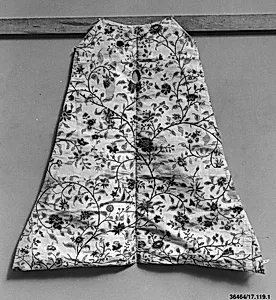
Statue robe
Unknown Artist
18th century
Medium
Silk
Dimensions
L. 33 1/2 x W. 33 inches (85.1 x 83.8 cm)
Classification
Textiles-Embroidered
Culture
French
Department
European Sculpture and Decorative Arts
Museum
Metropolitan Museum of Art, New York, NY
Credit
Rogers Fund, 1917
Accession Number
17.119.1
Rights
Public Domain
Art Historical Context
This exquisite *Statue Robe*, crafted in 18th-century France by an unknown artist, is a masterful example of embroidered silk textiles from the opulent Rococo era. 33½ x 33 inches, this square garment was designed to drape religious statues—likely the Virgin Mary or a saint—in churches, a cherished Catholic tradition that blended devotion with lavish artistry. Its shimmering silk fabric, adorned with intricate embroidery of flowers and leaves, the period's fascination with nature's abundance and botanical motifs, evoking the gardens of Versailles. The robe's creation showcases advanced French textile techniques, where skilled embroiderers used fine silk threads to create dimensional, lifelike flora that would catch the light during processions or liturgical celebrations. Such vestments were commissions of piety and prestige, often renewed seasonally to honor feast days, highlighting the era's fusion of fashion, faith, and fine craft. Acquired through the Rogers Fund in 1917 and now housed in the Metropolitan Museum of Art's Department of European Sculpture and Decorative Arts, this piece offers a glimpse into everyday religious splendor. It reminds us how textiles could transform stone figures into living symbols of grace, preserving a tactile link to France's cultural heritage.