
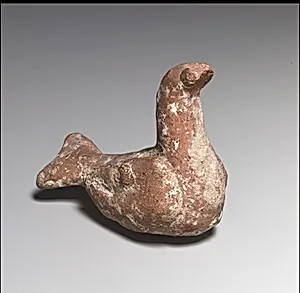
Statuette of a bird (dove)
Unknown Artist
Medium
Terracotta
Dimensions
H. with stand: 2 11/16 in. (6.8 cm)
Classification
Terracottas
Period
Hellenic
Department
Greek and Roman Art
Museum
Metropolitan Museum of Art, New York, NY
Credit
The Cesnola Collection, Purchased by subscription, 1874–76
Accession Number
74.57.17
Rights
Public Domain
Tags
About this artwork
This terracottas from Hellenic, dating to -507–-323, provides valuable insight into the artistic practices and material culture of its era. Fashioned from terracotta, this work represents ancient traditions of ceramic production. Ceramic arts involved sophisticated understanding of clay preparation, forming techniques, firing temperatures, and surface treatments that varied across cultures and periods. These durable objects provide crucial archaeological and art historical evidence, surviving mi...
Art Historical Context
This delicate terracotta statuette of a dove, crafted during the Hellenic period (ca. 507–323 BCE), offers a glimpse into the everyday artistry of ancient Greece. Standing just 2 11/16 inches tall its modern base, the unknown artist shaped this bird from fired clay, a medium prized for its accessibility and durability. Terracotta figurines like this were ubiquitous in Greek households, sanctuaries, and graves, serving as votive offerings or decorative pieces that bridged the mortal and divine worlds. In the vibrant cultural landscape of Classical Greece, such works highlight sophisticated ceramic techniques: careful clay preparation, molding or hand-building, and controlled firing to achieve a sturdy, reddish finish. Doves held special resonance, often symbolizing peace, love, or the goddess Aphrodite, though this anonymous piece reflects broader workshop traditions rather than a single master's hand. As part of the Cesnola Collection at The Metropolitan Museum of Art, acquired in 1874–76, it survives as vital evidence of regional styles and collective creativity. Today, this unassuming statuette connects us to the ingenuity of ancient artisans, reminding visitors that much of history's art emerged from unnamed hands, preserving the visual culture of a transformative era.