
Statuette of a cult attendant with a jar
Unknown Artist
664–30 B.C.
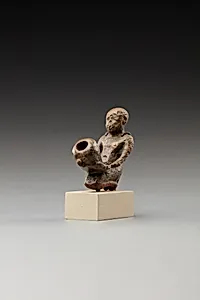
Medium
Bronze or cupreous alloy
Dimensions
H. 4 × W. 1.9 × D. 3.4 cm (1 9/16 × 3/4 × 1 5/16 in.)
Classification
Statuette, cult attendant, jar
Period
Late Period–Ptolemaic Period
Department
Egyptian Art
Museum
Metropolitan Museum of Art, New York, NY
Credit
Gift of Lily S. Place, 1923
Accession Number
23.6.20
Rights
Public Domain
Art Historical Context
This petite bronze statuette standing just 4 cm tall, depicts a cult attendant clutching a jar, likely used for libations or offerings in ancient Egyptian. Crafted during Egypt's Late Period to Ptolemaic era (664–30 B.C.), a time of political upheaval—from Assyrian and Persian invasions to Greek Ptolemaic rule—it reflects the enduring religious traditions that bridged pharaonic and Hellenistic influences. Such figures were common in temple settings, serving as eternal servants to the gods, ensuring continuous worship even when human priests were absent. The use of bronze or cupreous alloy highlights advanced metallurgical skills; artisans employed lost-wax casting to create intricate details like the attendant's kilt, muscular form, and attentive posture. These small votive sculptures, often donated by devotees, embodied the Egyptian belief in *ka*—the life force—activating through ritual to sustain divine favor. Donated to the Metropolitan Museum of Art in 1923 by Lily S. Place, this piece offers a window into everyday piety amid Egypt's dynamic late antiquity. (178 words)