
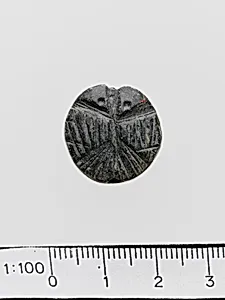
Steatite lentoid seal
Unknown Artist
ca. 1300–1200 BCE
Medium
Steatite
Dimensions
Diameter 1.83-85 cm
Classification
Gems
Culture & Period
Minoan · Late Minoan IIIB
Department
Greek and Roman Art
Museum
Metropolitan Museum of Art, New York, NY
Credit
Bequest of Richard B. Seager, 1926
Accession Number
26.31.301
Rights
Public Domain
Tags
Art Historical Context
This exquisite steatite lentoid seal, dating to the Late Minoan IIIB periodca. 1300–1200 BCE), hails from the vibrant Minoan culture of Bronze Age Crete. Shaped like a lentil—hence "lentoid"—with a diameter of just 183–1.85 cm, it the miniature artistry of the Aegean world. These seals were essential tools for marking ownership on documents, goods, or storage jars, reflecting the sophisticated administrative systems of Minoan palaces like Knossos. Carved from soft, translucent steatite (soapstone), the seal's intaglio design likely features birds, a common motif in Minoan glyptic art symbolizing nature's vitality or ritual significance. The precision of the carving, achieved through fine abrasives and drills, showcases the technical mastery of Minoan artisans during a time of cultural transition, as Mycenaean influences began to appear. Such gems offer glimpses into daily life, trade, and possibly religious beliefs in this thalassocratic society. Now housed in the Metropolitan Museum of Art's Greek and Roman Art Department, thanks to the 1926 bequest of archaeologist Richard B. Seager, this seal connects us to Crete's enigmatic past, where artistry and bureaucracy intertwined.