
Stela of Tetu and Nefertjentet
Unknown Artist
ca. 2124–1981 BC
Medium
Limestone, red, yellow and black paint
Dimensions
H. 22.7 × W. 41 × Th. 7 cm (8 15/16 × 16 1/8 × 2 3/4 in.)
Classification
Stela, Tetu, Nefertjentet
Period
First Intermediate Period–Middle Kingdom
Department
Egyptian Art
Museum
Metropolitan Museum of Art, New York, NY
Credit
Rogers Fund, 1919
Accession Number
19.3.33
Rights
Public Domain
Tags
Art Historical Context
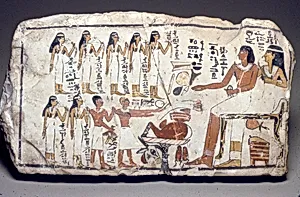
Welcome to the Egyptian Art galleries at the Metropolitan Museum of Art, where the **Stela of Tetu and Nejentet** (ca. 2124–1981 BC) offers a poignant glimpse into ancient Egyptian life during Dynasty 11, spanning the First Intermediate Period to the early Middle Kingdom. Carved from limestone and vividly painted in red, yellow, and, this modest stele—measuring just 22.7 × 41 × 7 cm—served as a commemorative monument, likely placed in a tomb or temple to honor the deceased and invoke eternal offerings from passersby. The stele features hieroglyphic inscriptions and depictions centered on Tetu and his wife Nefertjentet, highlighting the prominence of women in family portrayals of this era. As Theban rulers like Mentuhotep II reunified Egypt around this time, such stelae reflected a cultural shift toward more personal, accessible expressions of piety and status, bridging chaotic intermediate periods with the stability of the Middle Kingdom. Artistically, the low-relief carving and remaining pigment showcase typical techniques: incised hieroglyphs for spells from the Pyramid Texts or offering formulas, paired with symbolic colors evoking vitality and divinity. Acquired through the Rogers Fund in 1919, this artifact underscores women's roles in funerary rituals and the enduring Egyptian belief in the afterlife's communal support.