
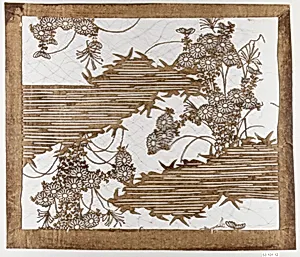
Stencil
Unknown Artist
Medium
Paper
Dimensions
15 3/4 x 13 1/4 in. (40.01 x 33.66 cm)
Classification
Stencils
Culture & Period
Japan · Edo period (1615–1868)
Department
Asian Art
Museum
Metropolitan Museum of Art, New York, NY
Credit
Gift of Clarence McKenzie Lewis, 1953
Accession Number
53.101.12
Rights
Public Domain
Tags
Art Historical Context
This delicate paper stencil, hailing from Japan's Edo period (16151868), exemplifies the exquisite craftsmanship of katagami—intricately cut stencils used for dyeing textiles like kimonos. Measuring 15 3/4 x 13 1/4 inches, it features floral motifs, a popular theme in Japanese decorative arts that symbolized beauty, seasons, and prosperity. During the Edo era, a time of relative peace and urban flourishing, such stencils were essential tools for artisans creating vibrant, patterned fabrics through resist-dyeing techniques like yūzen, where rice paste applied via the stencil prevented dye from reaching certain areas. The unknown artist's mastery is evident in the precise, layered cuts from tough mulberry paper (washi), allowing for multi-color printing without bleeding. These stencils reflect Japan's ukiyo-e-inspired aesthetic—ephemeral yet refined—and highlight the collaborative artistry between stencil makers (katashiroshi) and dyers. Culturally, they underscore the Edo obsession with fashion and nature, transforming everyday wear into wearable art. A generous gift to the Metropolitan Museum of Art in 1953 by Clarence McKenzie Lewis, this artifact invites us to appreciate the hidden ingenuity behind Japan's iconic textiles.