
Stencil
Unknown Artist
Medium
Paper
Dimensions
16 3/4 x 16 1/4 in. (42.55 x 41.27 cm)
Classification
Stencils
Culture & Period
Japan · Edo period (1615–1868)
Department
Asian Art
Museum
Metropolitan Museum of Art, New York, NY
Credit
Gift of Clarence McKenzie Lewis, 1953
Accession Number
53.101.65
Rights
Public Domain
Tags
Art Historical Context
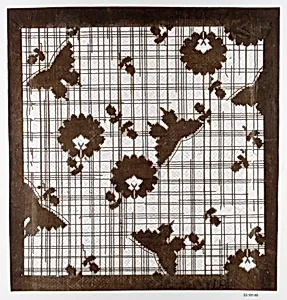
This delicate paper stencil from Japan’s Edo period (1615–1868) exemplifies the refined craftsmanship that supported the era’s flourishing textile arts. Created as a functional tool rather than a finished artwork, it was likely used in the katazome dyeing process, where intricate cut-out patterns allowed dyes to pass through onto fabric, producing repeated motifs on kimonos and other textiles. The design, featuring graceful butterflies and blooming flowers, reflects the period’s deep appreciation for nature’s fleeting beauty—a theme central to Japanese aesthetics. Stencils like this one highlight the collaborative nature of Japanese design, where anonymous artisans developed highly skilled techniques to translate complex imagery into repeatable forms. Made from layered paper, often reinforced for durability, these tools enabled both mass production for common garments and elaborate patterns for the elite. Their survival in museum collections, such as this example gifted to the Metropolitan Museum of Art in 1953, underscores their historical value as windows into everyday creativity during a time of peace and cultural flourishing. Today, visitors can admire the precision of the cutouts, which balance positive and negative space to evoke movement and life. Such objects remind us how practical objects often carry profound artistic and cultural significance, bridging utility and beauty in Edo-period Japan.