
Stencil
Unknown Artist
Medium
Paper
Dimensions
21 1/2 x 16 1/4 in. (54.61 x 41.27 cm)
Classification
Stencils
Culture & Period
Japan · Edo period (1615–1868)
Department
Asian Art
Museum
Metropolitan Museum of Art, New York, NY
Credit
Gift of Clarence McKenzie Lewis, 1953
Accession Number
53.101.67
Rights
Public Domain
Tags
Art Historical Context
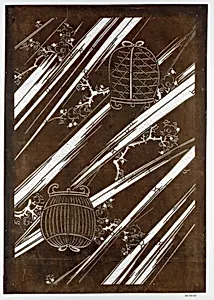
This delicate paper stencil from Japan's Edo period (16151868) exemplifies the ingenuity of traditional Japanese craftsmanship. Measuring 21½ × 16¼ inches, it features intricate floral motifs, a tag that hints at its blooming designs inspired by nature's beauty—a common theme in Edo art reflecting the era's fascination with seasonal flowers like cherry blossoms or chrysanthemums. Produced during a time of peace and urban prosperity, such stencils were essential tools in the vibrant world of textile production, bridging fine art and everyday luxury. Crafted from thin paper, likely mulberry (washi), the stencil was meticulously cut with fine blades to create resist patterns for katazome dyeing. Artisans would brush rice paste through the openings onto silk or cotton fabric, then apply dyes, preserving the stencil's sharp lines for multiple uses. This technique allowed for complex, multi-color patterns impossible with direct painting, influencing kimono designs worn by merchants and samurai alike. Its cultural significance lies in democratizing beauty: Edo stencils turned ordinary cloth into wearable art, embodying wabi-sabi elegance and the period's ukiyo-e spirit of fleeting pleasures. A generous gift to the Metropolitan Museum of Art from Clarence McKenzie Lewis in 1953, this anonymous masterpiece invites us to appreciate the unseen hands behind Japan's enduring aesthetic legacy.