
Stencil
Unknown Artist
19th century
Medium
Paper
Dimensions
9 x 16 1/2 in. (22.86 x 41.91 cm)
Classification
Stencils
Culture
Japan
Department
Asian Art
Museum
Metropolitan Museum of Art, New York, NY
Credit
Gift of Leon Dabo, 1955
Accession Number
55.175.13
Rights
Public Domain
Tags
Art Historical Context
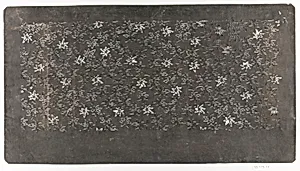
This delicate 19th-century Japanese stencil, crafted from paper and measuring 9 x 16½ inches, exemplifies the intricate artistry of katagami—traditional stencils used in yūzen dyeing techniques for kimonos and textiles. Its design features repeating leaf motifs, a nod to Japan's profound reverence for nature, where foliage often symbolizes seasonal change, renewal, and the fleeting beauty of life (mono no aware). Originating during the late Edo or early Meiji period, these stencils were essential tools for artisans, enabling precise, multi-layered patterns on silk fabrics through resist-dyeing processes. Cut freehand with tiny knives from thick mulberry paper reinforced with persimmon tannin for durability, they reflect masterful craftsmanship requiring years of training. This example, now in the Metropolitan Museum of Art's Asian Art Department thanks to a 1955 gift from Leon Dabo, highlights how everyday production tools doubled as folk art treasures. Culturally, such stencils bridged utility and aesthetics, influencing ukiyo-e prints and modern design. Visitors will appreciate its tactile precision, a window into Japan's blend of innovation and harmony with the natural world.