
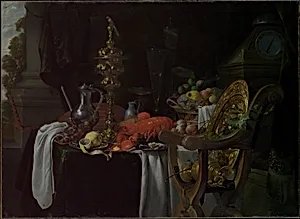
Still Life: A Banqueting Scene
probably ca. 1640–41
Medium
Oil on canvas
Dimensions
53 1/4 x 73 in. (135.3 x 185.4 cm)
Classification
Paintings
Department
European Paintings
Museum
Metropolitan Museum of Art, New York, NY
Credit
Charles B. Curtis Fund, 1912
Accession Number
12.195
Rights
Public Domain
Tags
Art Historical Context
Jan Davidsz de Heem's *Still Life: A Baneting Scene*, likely painted around 1640–41, the opulent pronkstilleven style of Dutch Golden Age. As one of the era's master still-life painters, de Heem captured the prosperity of the Netherlands during its Golden Age, when trade fueled lavish displays of wealth. This large-scale oil on canvas (over 5 by 6 feet) invites viewers into a sumptuous banquet table laden with grapes, fruit, lobsters, and utilitarian objects like glassware and pewter, rendered with breathtaking realism that blurs the line between art and reality. De Heem's virtuoso technique shines in his masterful handling of light and texture: the glistening surfaces of grapes and the iridescent shells of lobsters create a trompe l'oeil effect, drawing the eye deeper into the scene. These banquet still lifes often carried deeper meanings, subtly nodding to vanitas themes—reminders of life's transience amid abundance—reflecting the Calvinist culture's blend of material celebration and moral reflection. Acquired by the Metropolitan Museum of Art in 1912 through the Charles B. Curtis Fund, this work remains a highlight of European Paintings, showcasing how 17th-century Dutch artists elevated everyday objects into profound artistic statements. Visitors can't help but marvel at its sensory allure!