
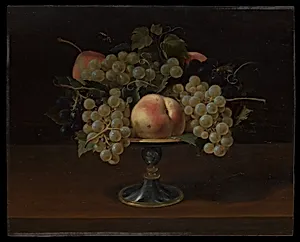
Still Life of Grapes and Peaches
ca. 1617
Medium
Oil on wood
Dimensions
14 3/16 × 17 1/2 in. (36 × 44.5 cm)
Classification
Paintings
Department
European Paintings
Museum
Metropolitan Museum of Art, New York, NY
Credit
Bequest of Errol M. Rudman, 2020
Accession Number
2020.263.9
Rights
Public Domain
Tags
Art Historical Context
Panfilo Nuvolone's *Still Life of Grapes and Pe*, painted around 1617, captures the lush abundance of ripe fruit in a masterful oil-on-wood panel, measuring 14 3/16 × 17 1/2 inches. Hailing from Cremona in Lombardy, Italy, Nuvolone was of a prominent family of Baroque artists, active during the early 17th century when life emerged as a distinct genre. This intimate work exemplifies the Italian tradition of *natura morta*, where everyday objects like glistening grapes and velvety peaches invited viewers to marvel at nature's fleeting beauty. The choice of oil on wood—a durable, smooth support favored for its fine detail—allowed Nuvolone to render textures with remarkable realism, from the dew-kissed skins of peaches to the translucent clusters of grapes. In an era dominated by religious and historical subjects, such still lifes held cultural significance as *vanitas* symbols, reminding beholders of life's transience amid sensory delight. This painting reflects the growing fascination with trompe l'oeil effects and the celebration of the material world in post-Renaissance Europe. Now in the Metropolitan Museum of Art's European Paintings collection, thanks to the 2020 bequest of Errol M. Rudman, it offers visitors a window into Baroque ingenuity and the quiet poetry of the ordinary.