
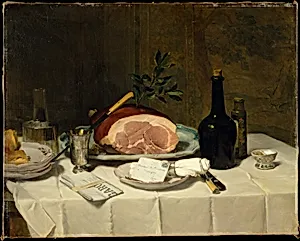
Still Life with Ham
1870s
Medium
Oil on canvas
Dimensions
28 3/4 x 36 1/4 in. (73 x 92.1 cm)
Classification
Paintings
Department
European Paintings
Museum
Metropolitan Museum of Art, New York, NY
Credit
Catharine Lorillard Wolfe Collection, Wolfe Fund, 1982
Accession Number
1982.320
Rights
Public Domain
Tags
Art Historical Context
Philippe Rousseau's *Still Life with Ham*1870s), an oil-on-canvas masterpiece measuring 28¾ × 36¼ inches, captures the indulgent textures of a ham and accompanying foods with astonishing realism. Housed in the Metropolitan Museum of Art's European Paintings department as part of the Catharineillard Wolfe Collection, this exemplifies Rousseau's mastery of the still life genre, where everyday edibles become subjects of visual feast. Painted in 19th-century France amid the rise of Realism and Impressionism, Rousseau inspiration from 17th-century Dutch masters like Willem Kalf, yet infused his compositions with a modern, almost photographic precision. The oil medium allowed him to render glistening surfaces, subtle shadows, and tactile details—making the ham appear tantalizingly edible, a technique known as trompe-l'œil. His hyper-realistic style elevated humble foods to symbols of bourgeois comfort and abundance during a time of social and economic flux post-Franco-Prussian War. This painting not only showcases technical virtuosity but also reflects cultural appreciation for culinary plenty in French art. Visitors often marvel at how Rousseau transforms the ordinary into the extraordinary, inviting us to savor the artistry in the everyday.