
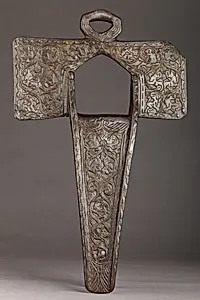
Stirrup
Unknown Artist
18th century
Medium
Iron, silver
Dimensions
H. 18 in. (45.7 cm); W. 11 1/4 in. (28.6 cm); D. 4 1/4 in. (10.8 cm); Wt. 6 lb. 11 oz. (3033.4 g)
Classification
Equestrian Equipment-Stirrups
Culture
Mexican
Department
Arms and Armor
Museum
Metropolitan Museum of Art, New York, NY
Credit
Rogers Fund, 1937
Accession Number
37.117
Rights
Public Domain
Art Historical Context
This magnificent 18th-century Mexicanrup, crafted from iron and silver, exemplifies the robust equestrian equipment essential to the colonial era's horseback culture. Measuring an imposing 18 inches high and weighing over 6 pounds, its substantial size and weight were designed for the powerful warhorses ridden by Spanish viceroys military cavalry, and elite charros in New Spain (modern-day Mexico). The iron core provided durability for rugged terrain and combat, while silver accents added a touch of opulence, signaling the rider's status in a society where horsemanship defined power and prestige. Housed in the Metropolitan Museum of Art's Arms and Armor Department, this stirrup highlights the fusion of European metallurgy and New World craftsmanship. Silver, abundant from Mexico's mines, was often inlaid or overlaid on iron to create functional yet decorative pieces, blending utility with artistry. Such items were not mere tools but symbols of colonial might, used in processions, battles, and ranching life that shaped Mexican identity. Acquired through the Rogers Fund in 1937, this rare survivor offers a tangible link to the thunder of hooves across vast haciendas and frontier trails, inviting us to imagine the riders who spurred history forward.