
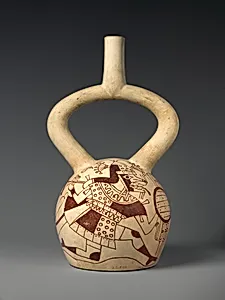
Stirrup-spout bottle with fox warrior
500–800 CE
Medium
Ceramic, slip
Dimensions
H. 11 3/4 × W. 6 1/2 × D. 6 in. (29.8 × 16.5 × 15.2 cm)
Classification
Ceramics-Containers
Culture
Moche
Department
Arts of Africa, Oceania, and the Americas
Museum
Metropolitan Museum of Art, New York, NY
Credit
Gift of Henry G. Marquand, 1882
Accession Number
82.1.29
Rights
Public Domain
Tags
Art Historical Context
This exquisite stirrup-spout bottle, crafted by Moche artists between 500 and 800 CE, exemplifies masterful ceramics of Peru's ancient Moche culture from the northern coast. Standing about 12 inches tall, the vessel features a fierce fox warrior, likely adorned with a mask, blending human and animal traits in a dynamic pose. The stirrup-spout design—a hallmark of Moche pottery—facilitates controlled pouring of liquids like chicha (corn beer), serving both practical and ritual purposes in daily life and ceremonies. Moche potters were renowned for their hyper-realistic modeling and slip-painting techniques, where fine clay slips (liquid clay) were applied and fired to create vibrant reds, creams, and blacks on highly polished surfaces. This bottle captures the culture's fascination with warriors, animals, and supernatural beings; foxes often symbolized cunning shamans or otherworldly protectors in Andean lore. Such vessels, often found in elite tombs, reflect Moche society's emphasis on warfare, sacrifice, and cosmology. A gift to the Metropolitan Museum of Art in 1882, this piece invites us to marvel at the Moche's artistic innovation and spiritual worldview, bridging the functional with the fantastical in pre-Columbian art.