
Stomacher
Unknown Artist
early 18th century
Medium
silk
Classification
Stomacher
Culture
Italian
Department
Costume Institute
Museum
Metropolitan Museum of Art, New York, NY
Credit
Rogers Fund, 1926
Accession Number
26.56.151
Rights
Public Domain
Tags
Art Historical Context
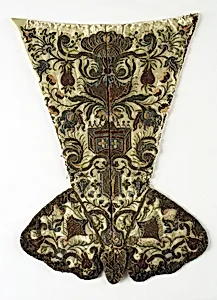
This exquisite *Stomacher* from early 18th-century Italy is a stunning example of period fashion, crafted by an unknown artist for the Costume Institute at The Metropolitan Museum of Art (acquired via the Rogers in 1926). A stomacher was a decorative triangular panel worn by women over the front of their bodice, filling the V-shaped opening of corseted gowns. It served both functional and ornamental purposes, transforming everyday attire into a canvas for opulent display during the Baroque era's lavish courtly life. Made of luxurious silk, the piece showcases Italy's renowned textile expertise, likely featuring intricate embroidery or woven motifs of fruit—a tag highlighting its thematic focus. Fruits symbolized abundance, fertility, and the sensual pleasures of nature in 18th-century art and design, evoking the era's Rococo influences with their playful, naturalistic details. The vibrant silk would have shimmered under candlelight at Venetian carnivals or Roman palaces, underscoring the wearer's wealth and status. As a rare survivor of fragile fashion, this stomacher offers a tactile glimpse into Italian cultural refinement, where clothing rivaled fine art in craftsmanship and symbolism. Visitors can appreciate how such garments blurred the lines between wearable adornment and artistic expression.