
Stone
Unknown Artist
probably 8th–12th century
Medium
Stone
Dimensions
H. 2 3/8 in. (6 cm) W. 2 7/8 in. (7.3 cm) D. 3/4 in. (1.9 cm) Wt. 3.4 oz. (96.399 g)
Classification
Stone
Department
Islamic Art
Museum
Metropolitan Museum of Art, New York, NY
Credit
Rogers Fund, 1948
Accession Number
48.101.298
Rights
Public Domain
Art Historical Context
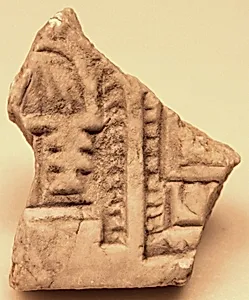
This petite stone artifact, simply titled *Stone*, hails from the Islamic world, likely crafted between the 8th and 12th centuries—a dynamic era spanning the Abbasid Caliphate and regional dynasties. Measuring just 2⅜ inches high and weighing a mere 3.4 ounces, its compact form suggests it was a portable object, perhaps a seal, amulet, or ornament, reflecting the exquisite miniaturization prized in early Islamic craftsmanship. Acquired through the Rogers Fund in 1948, it now resides in the Metropolitan Museum of Art's Department of Islamic Art, offering a tangible link to a golden age of cultural flourishing. Though the artist remains unknown, the work exemplifies the period's mastery of stone carving, a medium valued for its durability and versatility in Islamic art. Artisans often employed fine chiseling to create intricate motifs, blending functionality with subtle aesthetic appeal amid prohibitions on figural representation. This unassuming piece invites contemplation of everyday artistry in medieval Islamic societies, where even small stones could embody spiritual or practical significance, from talismans to trade markers. Visitors are encouraged to appreciate its quiet elegance up close in the gallery.