
Stone Chisel
Unknown Artist
before 16th century
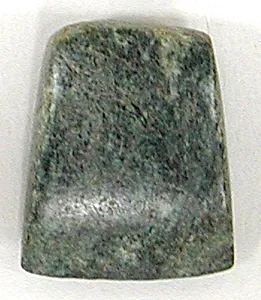
Medium
Stone
Dimensions
Length 1-1/4 in.
Classification
Stone-Implements
Culture
Mexican
Department
Arts of Africa, Oceania, and the Americas
Museum
Metropolitan Museum of Art, New York, NY
Credit
Bequest of Arthur M. Bullowa, 1993
Accession Number
1994.35.366
Rights
Public Domain
Art Historical Context
This petite stone chisel, measuring just 1-1/4 inches in length, hails from pre-16th-century Mexico and exemplifies the practical artistry of ancient Mesoamerican toolmaking. Crafted entirely from stone, it belongs to a class of implements used for carving wood, bone, or even softer stones—essential tools in the daily lives of indigenous peoples long before European contact. In the rich tradition of Mexican cultures, such as those of the Aztecs, Maya, or their predecessors, stone chisels like this one were vital for creating intricate sculptures, architectural elements, and ceremonial objects. Artisans likely shaped the tool through pecking, grinding, and polishing techniques, demonstrating sophisticated lithic technology honed over millennia. Its compact size suggests it was handheld, wielded with precision in workshops or ritual contexts. Housed in the Metropolitan Museum of Art's Department of the Arts of Africa, Oceania, and the Americas, this chisel—bequeathed by Arthur M. Bullowa in 1993—offers a tangible glimpse into pre-Columbian ingenuity. Far from mere utility, it underscores how everyday tools fueled the monumental achievements of ancient Mexico, bridging craftsmanship and culture.