
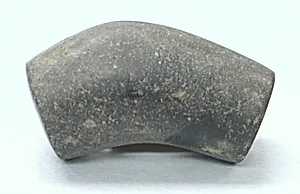
Stone Pulidor
Unknown Artist
before 16th century
Medium
Stone
Dimensions
Length 2-1/8 in.
Classification
Stone-Implements
Culture
Mexican
Department
Arts of Africa, Oceania, and the Americas
Museum
Metropolitan Museum of Art, New York, NY
Credit
Bequest of Arthur M. Bullowa, 1993
Accession Number
1994.35.308
Rights
Public Domain
Art Historical Context
Nestled in the Metropolitan Museum of Art's Department of Arts of Africa,, and the Americas, **Stone Pulidor** exemplifies the ingenuity of pre-Columbian Mexican craftsmanship. Dating before the 16th century this small stone implement—measuring just 2-1/8 inches in length—was crafted from durable stone by an unknown artist from ancient Mexican culture. As a tool classified among stone implements, it served a practical yet masterful purpose: polishing surfaces of ceramics, jade, or other materials to achieve the smooth, lustrous finishes prized in Mesoamerican societies. In the vibrant world of pre-Hispanic Mexico, such pulidors were essential to everyday artisanship, reflecting the sophisticated techniques of cultures like the Aztecs or their predecessors. Their compact size allowed for precise control, enabling workers to refine intricate pottery vessels, ornaments, and ritual objects that played key roles in daily life, trade, and ceremonies. This object's survival highlights the enduring legacy of these communities' resourcefulness, where humble tools underpinned grand artistic traditions. Bequeathed to the Met in 1993 by Arthur M. Bullowa, the Stone Pulidor invites us to appreciate the unsung heroes of ancient innovation—reminding visitors that beauty often emerges from utility and skill.