
Storage Bag
Unknown Artist
early 19th century
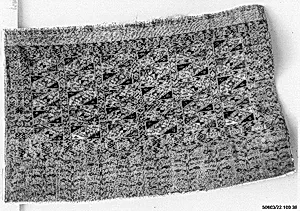
Medium
Wool (warp, weft and pile), silk (pile); asymmetrically knotted pile
Dimensions
H. 28 3/8 in. (72 cm) W. 46 1/4 in. (117.5 cm)
Classification
Textiles-Rugs
Department
Islamic Art
Museum
Metropolitan Museum of Art, New York, NY
Credit
The James F. Ballard Collection, Gift of James F. Ballard, 1922
Accession Number
22.100.39
Rights
Public Domain
Art Historical Context
This early 19th-century storage bag, crafted by an unknown artist, exemplifies the masterful textile traditions of Islamic art, likely from a nomadic or tribal community in Persia or the broader Near East. Measuring 28⅜ × 46¼ inches, it served a practical purpose: storing grains, clothing, or household goods during travels. Such bags, often called *khorjin*, were essential for pastoral peoples, blending utility with artistry in a portable form. Housed in the Metropolitan Museum of Art's Art Department, it entered the collection in 1922 as part of The James F. Ballard Collection. The bag's construction highlights sophisticated weaving techniques: wool forms the warp, weft, and much of the pile, with vibrant silk accents in the pile for added luster and durability. Its asymmetrically knotted pile—a hallmark of Persian rug-making—allows for intricate patterns and a plush texture, demonstrating the weavers' skill in creating dense, resilient fabrics by hand. This method, requiring thousands of knots per square inch, reflects centuries-old knowledge passed down orally. As a window into everyday life in the Islamic world, this piece reveals how textiles were both functional heirlooms and cultural expressions, bridging nomadism and settled societies. Visitors will appreciate its tactile beauty and the enduring legacy of anonymous artisans.