
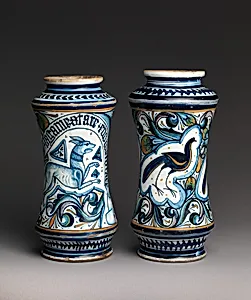
Storage jar (albarello) depicting a dog
Unknown Artist
ca. 1470–1500
Medium
Maiolica (tin-glazed earthenware)
Dimensions
Overall (confirmed): 11 13/16 × 5 5/8 × 5 5/8 in. (30 × 14.3 × 14.3 cm)
Classification
Ceramics-Pottery
Culture
Italian, possibly Pesaro
Department
European Sculpture and Decorative Arts
Museum
Metropolitan Museum of Art, New York, NY
Credit
Fletcher Fund, 1946
Accession Number
46.85.21
Rights
Public Domain
Tags
Art Historical Context
This charming maiolica storage jar, known as an *albarello*, hails from Italy—possibly the vibrant workshop center of Pesaro—around 1470–1500, during the late Renaissance. about 12 inches tall, its cylindrical shape with a narrow neck and flared base was designed for apothecaries to store powdered medicines, making it both functional and decorative. The unknown artist's choice of everyday yet whimsical motifs, like a lively dog amid birds, reflects the era's delight in nature-inspired imagery on household goods. Crafted from tin-glazed earthenware, maiolica's hallmark technique involved firing earthenware, applying a white tin-opacified glaze, and then painting vivid colors that wouldn't run during a final firing. This innovation, perfected in Italian Renaissance workshops, allowed for jewel-like blues, greens, and yellows, turning humble pottery into coveted luxury items exported across Europe. Pesaro's potters were renowned for such bold, narrative designs on albarelli, blending utility with artistic flair. Today, this jar at the Metropolitan Museum of Art invites us to imagine bustling 15th-century pharmacies, where art met medicine. Its animal motifs—dogs symbolizing loyalty, birds evoking freedom—add a touch of playfulness, reminding visitors of Renaissance Italy's harmonious blend of beauty and practicality.