
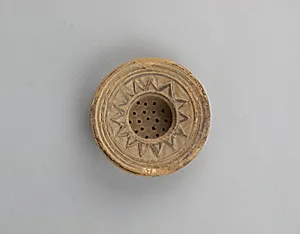
Strainer
Unknown Artist
750–480 BCE
Medium
Terracotta
Dimensions
7/8in. (2.2cm) Other: 2 7/8in. (7.3cm)
Classification
Vases
Culture & Period
Cypriot · Cypro-Archaic ?
Department
Greek and Roman Art
Museum
Metropolitan Museum of Art, New York, NY
Credit
The Cesnola Collection, Purchased by subscription, 1874–76
Accession Number
74.51.472
Rights
Public Domain
Art Historical Context
This delicate terracotta strainer, crafted by an unknown Cypriot artist during the Cypro-Archaic periodcirca 750–480 BCE), offers a glimpse into ancient daily life on the island of Cyprus. just 7/8 inch high and 2 7/8 inches wide, its petite scale suggests it was designed for practical household use—likely straining liquids like wine or olive oil in rituals or meals. Made from fired clay, a staple medium in ancient pottery, it exemplifies the durable yet finely shaped vessels produced in Cyprus workshops. Cypriot art during this era blended influences from Greece, the Near East, and local traditions, resulting in distinctive forms like this vase classified strainer. The Cypro-Archaic period marked a time of cultural flourishing on Cyprus, with pottery serving both utilitarian and ceremonial roles. Though no decoration details survive in records, such objects highlight skilled hand-building or wheel-throwing techniques, essential for everyday functionality. Acquired as part of The Cesnola Collection (purchased by subscription, 1874–76), this piece resides in the Metropolitan Museum of Art's Greek and Roman Art department. It underscores Cyprus's rich archaeological legacy, inviting us to ponder the hands that once held it amid the island's ancient trade and traditions.